
Registration of housing properties in the Mumbai municipal region increased 35 per cent year-on-year to 7,556 units during this month on rising demand, according to Knight Frank. The registrations for September 2021 were 87 per cent higher compared to the pre-pandemic period of September 2019. "Mumbai BMC region (Churchgate to Dahisar and Colaba to Mulund) recorded its best September month performance. Recording 35 per cent YoY growth in property registrations in September 2021, 7,556 units is a 10-year best performance in the month of September," Knight Frank said in a statement.
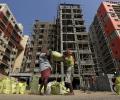
Housing demand has breached pre-COVID levels with 92 per cent year-on-year growth in sales during July-September period units across eight major cities, mainly on the back of stable prices, very low mortgage rates, property consultant Knight Frank India said on Monday. Releasing its India Real Estate Update for Q3 (July-September quarter) of the 2021 calendar year, the consultant reported that housing sales increased to 64,010 units from 33,404 units in the same period last year. In the previous April-June quarter, 27,453 residential units were sold. "The total residential sales of the top eight markets under review during Q3 2021, reached 104 per cent of 2019 quarterly average," the consultant said, adding that sales have breached pre-COVID levels.

Global property consultancy firm, Knight Frank India, has said that prices in the residential property segment are likely to decline in a short time.

Roiled by the pandemic, home prices in India fell 3.6 per cent in December quarter 2020, pushing down its global ranking to the lowest 56th as compared to 43rd in the year-ago period, while Turkey continued to lead the tally, says a report. According to international property consultancy Knight Frank, India was the weakest-performing housing market in October-December last year with a decline of 3.6 per cent year-on-year in prices. The Knight Frank global house price index tracks the movement in mainstream residential prices across 56 countries and territories worldwide using official statistics.

New Delhi slipped by two positions to rank 39th globally in terms of price appreciation of prime residential properties during the September quarter, according to Knight Frank. Mumbai ranked 40th, same as the June quarter, while Bengaluru moved up one spot to 42nd rank. New Delhi stood at the 37th rank, while Mumbai and Bengaluru were at 40th and 43rd positions, respectively, during the second quarter of 2021 calendar year. In its 'Prime Global Cities Index Q3 2021' report, Knight Frank tracked the movement in prime residential prices in local currency across 45-plus cities worldwide.

Property registrations in Mumbai hit the 100,000-mark till November, marking a 10-year high as "demand enablers" like low prices and cheaper interest rates lure people to buy homes in India's financial capital. The previous 10-year high was 80,746 units in 2018. November 2021 recorded property sale registrations of 7,582 units: an 18 per-cent decline compared to same month last year (YoY) when stamp duty rate was at its lowest level of two per cent, said property consultant Knight Frank India, quoting data from the Maharashtra government's Department of Registrations and Stamps. Compared to October or a month-on-month (MoM) basis, registrations are lower by 12 per cent.

Wealthy Indians are adding new residential addresses to their assets, many of them in Dubai. The quality of life in the desert city is comparable to any coveted city in the world. Its property market is regulated to protect investors' interests.

Housing prices may rise 5 per cent next year on improved demand, according to Knight Frank India. In its '2022 Outlook Report', the property consultant said: "While 2021 was mostly impacted by the volatility due to the pandemic, 2022 may prove to be a more stable year for the sector both for commercial as well as the residential sector." On the housing segment, the report said that sales momentum is expected to continue in 2022 as prospective homebuyers' preferences for bigger homes, better amenities, and attractive pricing will keep them interested to seal the deals.

Housing demand should improve nationwide after the Reserve Bank of India (RBI) cut the repo rate by a larger-than-expected 50 basis points (bps) on Friday, said real estate industry executives. The rate cut comes after housing sales in top Indian cities in the first quarter of 2025 dipped 28 per cent due to skyrocketing residential property prices and geopolitical headwinds, according to Anarock.
'The market today is different -- more mature and conducive. As a national player, you can't not be in Mumbai. And competition is always good.'

The average housing prices declined by 2-7 per cent year-on-year during July-September in Delhi-NCR, Mumbai, Chennai, Pune, Kolkata, and Ahmedabad on lower demand amid COVID-19 pandemic, according to Knight Frank India. Prices, however, increased in Bengaluru and Hyderabad by 3 per cent and 4 per cent, respectively, during July-September 2020 compared with the year-ago period. Chennai saw the maximum fall of 7 per cent, followed by Delhi-NCR and Pune at 5 per cent. Rates dipped 3 per cent each in Kolkata and Ahmedabad, while Mumbai witnessed 2 per cent price correction.

The growth was primarily driven by domestic investments, which accounted for 60 per cent of the total inflows during the first quarter of the financial year.

The real estate market has seen a decline in affordability due to the recent rise in median loan rates as a result of the 50 basis points (bps) hike in repo rates by the Reserve Bank of India (RBI). A cumulative increase of 0.95 per cent in median home loan rate has impacted the purchase affordability and purchase decisions of homebuyers, according to the Affordability Index by Knight Frank. The Affordability Index tracks the EMI (equated-monthly instalment) to income ratio for an average household.

An interview with Kekoo Colah, executive director of Knight Frank (India) Pvt Ltd.

Prices of residential property in Mumbai, NCR, Bengaluru, Pune, Chennai, Hyderabad, Kolkata and Ahmedabad witnessed a sharp fall in H1-2020 with Kolkata witnessing the steepest drop of 7.5% to Rs 33,433 per square meter. Demand for office space fell the most in Pune and NCR markets at 47% and 45% respectively.
The real estate action is no longer limited to the large metropolises of India but has now permeated to the burgeoning smaller towns and cities.

'The Indian retail landscape is poised for a significant shift with the anticipated arrival of several prominent international luxury fashion brands in 2024.'

Housing sales across top eight cities rose 51 per cent last year, even as the office market continued to slump due to the Covid pandemic with gross leasing witnessing a 3 per cent fall, according to Knight Frank India. Housing sales increased to 232,903 units during last year, from 154,534 units in 2020, but demand was down 5 per cent from the 2019 pre-pandemic levels and 37 per cent lower than the 2011 peak numbers. In the office segment, the gross leasing of office space fell to 38.1 million square feet in 2021, from 39.4 million square feet in the previous year, due to the adverse impact of the second wave of the Covid pandemic.

Knight Frank and Royal Institute of Chartered Surveyors in their report said that 10 million homes will be delivered by 2022 as targeted by the government.

One in four people surveyed by Knight Frank said they were more likely to move in the next 12 months as a result of the Covid-19 pandemic.
The RBI's decision to hike the benchmark interest rate will make home loans costlier and affect housing sales, especially in affordable and mid-income segments, according to property consultants. The RBI on Wednesday hiked the key benchmark rate by 50 basis points. Property consultancy firms Anarock, Knight Frank India, JLL India, Colliers India, India Sotheby's International Realty and Investors Clinic said that the RBI's move was on the expected line to control inflation and this would result in an increase in interest rates on home loans.

Buying makes sense for those planning to stay in a city for at least 7 to 10 years. Financial preparedness is crucial.

Launch of new residential projects in top eight cities -- Ahmedabad, Bengaluru, Chennai, Hyderabad, Kolkata, Mumbai, National Capital Region (NCR) and Pune -- came down by 41 per cent in first half of 2017.

The e-commerce sector's usage of commercial spaces was about 4.2 million square feet of the total of 17.5 million sq ft consumed in the first half of 2015.

The sentiment in the real estate industry turned optimistic during October-December 2020 and the outlook for the next six months is positive on the back of revival in demand for both residential and office properties, according to a survey by Knight Frank India-FICCI-Naredco. The 27th edition of 'Real Estate Sentiment Index Q4 2020 survey' of developers, banks, financial institutions and private equity players operating in the sector was released on Monday in a video-conference. As per the report, the 'Current Sentiments Score', for the first time in 2020, entered the optimistic zone at 54 points in Q4 (October-December) 2020, a significant jump of 14 points over the previous quarter.
Mumbai continues to be the investment hotspot for the banking and financial sector.

Mumbai recorded a 4x growth in property registrations on a yearly basis in June this year, as restrictions imposed by the state government ended. Mumbai and its suburbs recorded property registrations of 7,857 units in June, compared to 1,839 units registered in June 2020. The registrations for June were also 39 per cent higher, compared to the same month in the pre-pandemic period of June 2019, said a new report by Knight Frank India.
Indian property market and its regulations need to be reformed further to attract foreign direct investment while the demand for space for business process outsourcing is expected to cross over two crore square feet in the next three-five years.
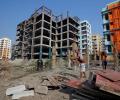
Housing sales fell 37 per cent year-on-year during the 2020 calendar year while gross office space leasing declined 35 per cent on low demand because of the coronavirus pandemic, but demand improved significantly in the last quarter to cross pre-COVID level, property consultant Knight Frank India said on Wednesday. In its 'India Real Estate - Residential and Office Update H2 2020' report released on Wednesday, the consultant reported that sales of residential properties fell 37 per cent to 154,534 units in 2020 across eight cities as compared with 245,861 units in the previous year.

Despite being election year, Indian ultra HNIs are more optimistic of the country's growth journey and expect wealth to increase in the year 2019.
Let's take a look at some of the markets that saw biggest increase in residential property prices.

Retail inflation dipped marginally to a nearly six-year low of 3.34 per cent in March due to a decline in prices of vegetables and protein-rich items. The Consumer Price Index (CPI) based inflation was 3.61 per cent in February and 4.85 per cent in March last year.

During 2023, the Indian real estate sector - both housing and commercial - witnessed buoyancy fuelled by demand, supply, and absorption, and the sector is banking on the upcoming Budget to keep the momentum going. Mumbai-based Sattva Group wants the government to focus on the critical pillars for long-term growth. The company emphasised on the infrastructure boom with increased allocation, lower goods and services tax (GST) rates, incentives for affordable housing and single-window clearance to fast-track projects and support liquidity.

Greed is coming back. So, developers can increase prices. I am sure that prices will not go down from here onwards.
The Knight Frank Global House Price Index rose by 0.9 per cent in the year to March 2012. Knight Frank is a global residential and commercial property consultancy.

A recent survey discovered that Bengaluru has some of the classiest high streets in our country.

Consultancy firms Jones Lang Lasalle Meghraj and Knight Frank India said there are about 7,000 such apartments to be delivered within a year in Mumbai alone, where the cost is not below Rs 4.7 crore (Rs 47 million) for a single unit.
Are you planning to buy a flat in the near future? If yes, then should you wait for another 6-9 months given the global meltdown in financial markets?
